
- All
- Product Name
- Product Keyword
- Product Model
- Product Summary
- Product Description
- Multi Field Search
English
Views: 0 Author: Site Editor Publish Time: 2025-11-11 Origin: Site
Choosing between a 3-blade and a 5-blade ceiling fan often sparks debate. Is more always better when it comes to fan blades? The answer is nuanced. While blade count certainly influences airflow and aesthetics, it's not the only factor to consider. In this article, we'll delve into the performance differences between a 3-blade ceiling fan vs 5-blade ceiling fan performance, and help you determine which one is right for your space.
When deciding between a 3-blade and a 5-blade ceiling fan, airflow and efficiency are the primary factors. A 3-blade ceiling fan generally moves air more efficiently than a 5-blade fan. This is because it experiences less drag and can rotate at higher speeds. Faster rotations result in quicker, more concentrated bursts of air—ideal for cooling large, open spaces like gyms or warehouses.
On the other hand, a 5-blade ceiling fan tends to offer more evenly distributed airflow at lower speeds. This results in a gentler, broader breeze, making it ideal for spaces where you want a quieter fan experience, such as living rooms, bedrooms, or offices. In large, open spaces, a 3-blade ceiling fan might provide the powerful airflow you need, while a 5-blade ceiling fan excels in quieter, more relaxed environments.
The speed of a ceiling fan often correlates with how many blades it has. A 3-blade ceiling fan spins faster, creating strong bursts of airflow but also generating more noise at top speed. Conversely, a 5-blade fan spins slower, which helps reduce the buffeting sound and makes it a quieter option overall. If noise is a concern, a 5-blade ceiling fan is likely your best choice. Its smoother airflow makes it quieter, particularly in environments that require a serene atmosphere.
Aesthetics play a significant role in fan selection. 3-blade ceiling fans tend to have a minimalist, modern appeal. Their sleek design is perfect for contemporary spaces that prioritize clean lines and simplicity.
5-blade ceiling fans, in contrast, offer a more traditional and symmetrical look, appealing to those who prefer classic design elements. These fans often add a sense of balance and elegance to spaces with more traditional . If you prefer a modern, industrial look, a 3-blade ceiling fan fits well in minimalist environments. For a more balanced, traditional aesthetic, go with a 5-blade model.
A common misconception is that the more blades a fan has, the better it will circulate air. However, the reality is more complicated. Motor power, blade pitch, and the overall fan design have a far greater impact on airflow than blade count alone.
A 3-blade ceiling fan typically operates faster with less drag, allowing it to generate higher airflow, especially in large spaces.
A 5-blade ceiling fan may have more blades for smoother, quieter operation, but with the same motor, it may not move air as efficiently as a 3-blade fan at full speed.
The truth is, blade count doesn't always correlate to airflow efficiency. A well-designed 3-blade ceiling fan with a high-quality motor can easily match or outperform a 5-blade fan in terms of air circulation. Focus on the motor power and blade design rather than just the number of blades when choosing a ceiling fan.
Motor power and blade pitch are crucial to the performance of both 3-blade and 5-blade ceiling fans. A high-quality motor allows both fan types to perform well. The blade pitch (the angle of the blades) is just as important—steeper blades push more air, increasing airflow efficiency.
3-blade ceiling fans often have a higher RPM (rotations per minute) capability, pushing air quickly through the space.
5-blade ceiling fans tend to have a lower RPM but offer more even and quieter air distribution.
If you need more direct airflow, a 3-blade fan with a high-quality motor and a sharp blade pitch will provide powerful airflow. For even air circulation with less noise, a 5-blade fan with a moderate motor power and pitch may be the better option.
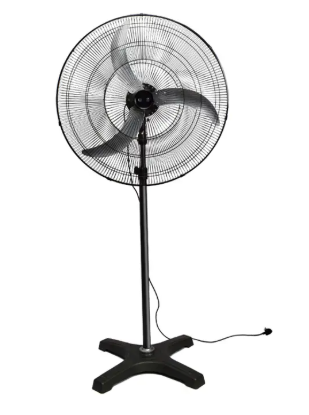
With fewer blades, 3-blade ceiling fans have less drag. This reduces the load on the motor, allowing the fan to operate at higher speeds. The faster rotation leads to stronger, more focused airflow, which is perfect for cooling larger, more open spaces like sports courts or factories. For large rooms or commercial spaces, opt for a 3-blade ceiling fan for high-efficiency cooling.
5-blade ceiling fans offer a more gentle airflow that's better suited for spaces where noise levels need to be minimized. The additional blades create a more stable and balanced operation, making them ideal for quieter environments like bedrooms, lounges, or offices. Choose a 5-blade ceiling fan if you need consistent airflow with minimal noise, especially in home spaces.
When selecting between a 3-blade ceiling fan and a 5-blade ceiling fan, consider your room size and ceiling height.
For larger rooms with high ceilings, a 3-blade ceiling fan will efficiently move air across a broader space. Its higher RPM allows it to cover large areas more quickly.
For smaller rooms or spaces with standard ceilings, a 5-blade ceiling fan will offer a balanced, even breeze.
Match the fan size and blade count to your room size and ceiling height for optimal airflow.
In terms of air distribution, a 3-blade ceiling fan creates quick, powerful gusts that provide direct cooling. However, it might not distribute air as evenly throughout the room. 5-blade fans, however, are designed for broader air coverage at a lower speed, offering a more uniform distribution. For consistent air movement across the room, opt for a 5-blade fan. For a more powerful burst of air, a 3-blade fan is the better choice.
The material of the blades in a ceiling fan significantly affects its efficiency and durability. Fans made from metal or wood may perform differently depending on the environment in which they're used.
Metal blades are durable and efficient, ideal for high-traffic or industrial settings.
Wooden blades tend to be quieter and aesthetically pleasing but may not perform as well in humid or high-moisture environments.
Choose metal blades for industrial or high-usage settings and wood or plastic blades for home use where noise reduction is important.
Blade pitch, the angle at which the blades sit, also influences performance. A steeper blade pitch moves more air but requires a more powerful motor. A shallower blade pitch will move less air but is more energy-efficient. For spaces requiring strong airflow, choose a ceiling fan with a steeper blade pitch. For quieter operation, opt for a fan with a gentler blade pitch.
In the debate between 3-blade ceiling fans and 5-blade ceiling fans, the winner ultimately depends on your specific needs and preferences. While 3-blade fans excel at providing strong, direct airflow, 5-blade fans offer smoother, quieter operation. Consider your space, noise tolerance, and aesthetic preferences when making your choice.
Both options can work efficiently, but it's the balance of motor power, blade design, and blade pitch that determines performance. Remember, the number of blades is just one factor among many. offers a variety of high-quality ceiling fans, providing both 3-blade and 5-blade options. Qinxin's fans are designed to deliver efficient airflow and a quiet, comfortable environment for any space.
A: The main difference is in airflow and noise. A 3-blade ceiling fan typically offers faster airflow but can be noisier. A 5-blade ceiling fan provides a quieter, more evenly distributed breeze.
A: Not necessarily. While a 3-blade ceiling fan may have faster speeds, a 5-blade ceiling fan distributes air more gently. The motor power and blade design are more important for performance.
A: A 3-blade ceiling fan is usually more energy-efficient due to its higher RPM and less drag. However, motor power and blade pitch also play a significant role in energy use.


