
- All
- Product Name
- Product Keyword
- Product Model
- Product Summary
- Product Description
- Multi Field Search
English
Views: 0 Author: Site Editor Publish Time: 2025-11-10 Origin: Site
Ceiling fans are essential for cooling, especially during the warmer months. But does the number of blades really affect their cooling performance? In this article, we'll explore how fan blade count influences airflow, energy use, and overall cooling efficiency. By the end, you'll understand whether more blades truly enhance cooling.
A ceiling fan cools a room by circulating air to enhance the body's natural cooling process through sweat evaporation. The fan's blades push air downwards, creating a wind-chill effect that makes the room feel cooler, even if the temperature remains the same.
The effectiveness of this airflow depends on various factors, including the fan's size, motor power, and blade count. But how much impact does the number of blades really have on cooling?
When discussing ceiling fans, the blade count often comes into focus. While fans with more blades may seem like they would push more air, the key factor in airflow is blade design—angle, pitch, and material—rather than the number of blades alone.
Blade shape and the angle at which they cut through the air are what primarily determine airflow. Even with fewer blades, a well-designed fan can move air efficiently, creating an effective cooling effect.
One popular belief is that more blades on a ceiling fan will increase airflow, improving cooling. However, this isn't necessarily the case. A fan with more blades can actually become less efficient. Here's why:
Air Resistance: Each additional blade creates more air resistance. More blades may slow down the motor, which can reduce the fan's ability to move air at higher speeds.
Air Movement: Fans with fewer blades, such as three blades, tend to be more efficient in terms of speed and air movement. They spin faster, moving air quicker and creating a stronger breeze.
This means that while a five-blade ceiling fan may look more appealing, it may not always outperform a three-blade fan in terms of cooling. When selecting a ceiling fan, prioritize blade design and motor power over just the number of blades. A well-balanced fan with fewer blades can often outperform a fan with more blades.
Another consideration is energy efficiency. Ceiling fans with more blades may consume more power due to increased resistance. A five-blade fan typically requires a stronger motor to maintain optimal performance. On the other hand, a three-blade fan is likely to use less energy while providing a comparable cooling effect in smaller spaces.
While the energy consumption difference may seem marginal, for larger homes or businesses, the cumulative savings from using more energy-efficient fans can add up. For energy savings, opt for fans with three to four blades, especially in smaller or moderately sized rooms.
The ideal number of blades depends largely on room size and ceiling height. In smaller rooms, fans with fewer blades often perform better, as the faster speed helps circulate air efficiently. In large rooms or open spaces, fans with more blades may help spread air more evenly across a larger area, but they will still need to work harder to move the same volume of air. In such cases, it's more important to consider the fan's motor power and blade pitch than the number of blades. For larger spaces, consider using fans with more powerful motors, regardless of blade count.
In bedrooms, where noise reduction is often a priority, fans with more blades are often preferred because they tend to operate more quietly. The additional blades help distribute airflow evenly without creating as much turbulence. However, the overall effectiveness of the fan still depends on its speed, size, and motor power. For a quieter experience, choose fans with five blades, especially if your bedroom is medium to large in size.
When comparing three-blade and five-blade ceiling fans, the following differences are clear:
Three-Blade Fans: These fans are typically more energy-efficient and move air faster, making them ideal for small to medium-sized rooms. They generate a strong breeze and are usually quieter.
Five-Blade Fans: These fans create less air resistance and often run more quietly, making them a better choice for large rooms or spaces where noise reduction is important. However, they typically don't move air as efficiently as three-blade fans.
The popularity of multi-blade fans often stems from their sleek aesthetic. While they may appear more sophisticated, the extra blades are often for visual appeal rather than an improvement in performance. If cooling is your priority, a well-designed three-blade fan with a powerful motor will often outperform a multi-blade fan in smaller spaces. Don't choose a multi-blade fan based solely on appearance—consider the room's size, fan speed, and noise level for the best cooling performance.
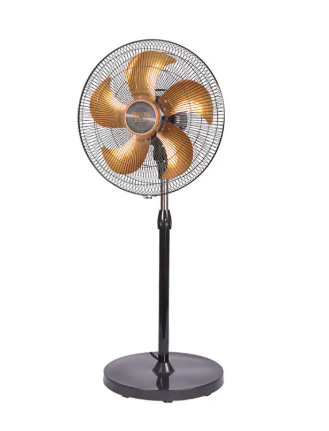
The speed at which a ceiling fan operates plays a crucial role in its cooling effectiveness. A fan with more blades may run slower but move more air at a lower speed. On the other hand, a fan with fewer blades may spin faster, creating a stronger breeze and better cooling.
Motor power is also important. Even with more blades, a weak motor will struggle to move the air effectively. Be sure to select a ceiling fan with a motor that suits the room size and cooling needs. Opt for a ceiling fan with a strong motor, especially for larger rooms or open spaces.
The location and installation of your ceiling fan significantly impact its efficiency. For maximum airflow, the fan should be placed at least 8-10 feet above the floor. Higher ceilings may require a fan with longer blades or a stronger motor to distribute air evenly. Ensure your ceiling fan is properly installed and at the optimal height for the room to maximize its cooling performance.
When selecting a ceiling fan, the number of blades isn't the only factor to consider. Blade design, motor power, and room size all play a crucial role. While more blades may provide quieter operation and a more aesthetically pleasing design, they don't always lead to better cooling. In fact, fans with fewer blades can be more energy-efficient and provide better airflow, especially in smaller spaces. For efficient cooling and energy savings, focus on the fan's overall design, motor power, and size. Room size and placement also significantly impact airflow and comfort.
By understanding these factors, you can select the ideal ceiling fan to meet your needs. Whether you're prioritizing quiet operation, strong airflow, or energy efficiency, Qinxin provides fans that offer optimal performance and value, making them an excellent choice for any space.
A: Yes, the number of blades can influence a ceiling fan's efficiency, but it's not the only factor. While more blades may reduce noise, fans with fewer blades often provide better airflow, especially in smaller rooms.
A: The blade count can impact airflow, with fewer blades generally moving air faster. However, the design and motor power of the ceiling fan are more important for optimizing airflow and cooling.
A: Not necessarily. Ceiling fans with fewer blades tend to be more energy-efficient, as they create less air resistance, requiring less motor power.


