
- All
- Product Name
- Product Keyword
- Product Model
- Product Summary
- Product Description
- Multi Field Search
English
Views: 0 Author: Site Editor Publish Time: 2025-11-10 Origin: Site
Choosing the right ceiling fan size can transform your room's comfort. Have you ever wondered if your fan's blade size is just right? Getting the blade span correct ensures effective airflow and energy efficiency. In this article, we'll discuss how to measure a ceiling fan blade and explain why it matters for your space. You'll learn how the right measurement can make all the difference.
Blade span, also known as the fan's diameter or sweep, is the measurement taken from the tip of one blade to the tip of the opposite blade. This is the most commonly referenced size when shopping for ceiling fans. It's essential to note that the blade span directly impacts how much air a fan can move.
For example, a larger blade span allows the fan to cover a bigger area, making it suitable for larger rooms. A fan with a smaller blade span will work best in smaller rooms where air circulation requirements are less demanding.
The size of the fan blades plays a vital role in air circulation. Larger fans move more air, providing better cooling in larger rooms, while smaller fans are more efficient in smaller spaces. If the fan blades are too small for the room, air circulation will be poor, leaving the room feeling stuffy. Conversely, if the fan blades are too large for the room, they could create too much airflow, making the room uncomfortable and potentially wasting energy. When selecting a fan, make sure the blade span matches the size of the room to maintain efficient airflow.
Choosing the correct fan size is essential to ensure your fan provides enough airflow for the room's square footage. Here's a general guideline for ceiling fan sizes based on room size:
| Room Size | Recommended Fan Blade Span |
|---|---|
| Up to 75 square feet | 29-36 inches |
| 76-144 square feet | 36-44 inches |
| 145-225 square feet | 44-50 inches |
| 226-400 square feet | 52-60 inches |
| Larger than 400 sq. ft | Multiple fans or 65+ inches |
Before taking any measurements, make sure the fan is turned off and the blades have stopped spinning. This ensures your safety and allows you to measure accurately.
To measure the blade span, you'll need:
A tape measure
A ladder (if the fan is mounted high)
A helper (optional, but useful)
Having these tools ready will make the process smooth and accurate.
For ceiling fans with an even number of blades, you'll measure the distance from the tip of one blade to the tip of the opposite blade. This will give you the total blade span or the diameter.
Stand on a ladder (if necessary) and use a tape measure.
Measure from the tip of one blade to the tip of the opposite blade.
The resulting number is the diameter or blade span.
For fans with an odd number of blades, the process is slightly different:
Measure from the tip of one blade to the center of the fan.
Multiply this measurement by two to get the total blade span or diameter.
Ensure that the fan has at least 30 inches of clearance from walls or any obstacles to allow for proper airflow. Insufficient clearance can affect how well the fan circulates air.
A common mistake when measuring the ceiling fan blade span is focusing on the wrong dimensions. Many people mistakenly measure the fan's motor housing or simply measure the length of the blades rather than the blade span. It's crucial to always measure from the tip of one blade to the tip of the opposite blade to get the correct diameter or span. This ensures you get an accurate measurement and avoid misjudging the size of the fan, which can impact its performance and efficiency in your space.
Another common error is failing to account for blade clearance. It's essential to ensure there's enough space between the fan blades and the walls or furniture. If a fan is placed too close to the walls or any large furniture, the airflow will be restricted, reducing its effectiveness in circulating air throughout the room. Ideally, there should be at least a 30-inch clearance between the fan blades and the walls. This space allows for proper airflow and ensures the fan operates efficiently, providing optimal cooling or circulation.
Many individuals confuse the blade span with the overall fan size, which includes the motor housing and other components. The fan size refers to the entire fixture, but the blade span is only the measurement of the blades themselves. When selecting a ceiling fan, you should focus on measuring just the blade span for the most accurate sizing. This distinction is important to make sure the fan fits the space and meets the airflow requirements of your room.
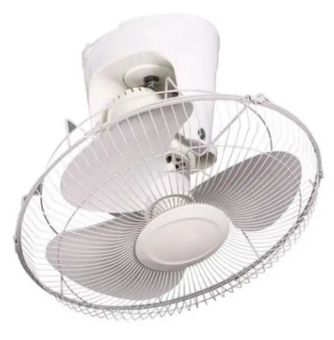
Once you've measured the blade span, use it to choose a fan that matches the size of your room. To find the right fan size based on your room's square footage, refer to the chart mentioned earlier in the article. For example, if your room is 150 square feet, a fan with a blade span between 44 and 50 inches will be the most efficient. Using the correct blade span ensures proper airflow and helps to maintain a comfortable temperature in the room.
Ceiling height plays an important role in selecting the right ceiling fan. If your ceiling is higher than 9 feet, you may need to use a downrod to position the fan at the ideal height for proper air circulation. This helps the fan work more efficiently and ensures the air is circulated at the correct level. For ceilings that are lower than 8 feet, a low-profile or 'hugger' ceiling fan may be the best choice. These fans are designed to be mounted closer to the ceiling, maximizing headroom while still providing efficient airflow.
Beyond just the size of the fan, there are several other factors to consider when choosing the best ceiling fan for your room. Think about the style of the fan and how it fits with the room's décor. Some fans also come with added features, such as built-in light kits, which can be useful if you need extra lighting in the room. Additionally, consider energy efficiency—choosing an energy-efficient fan can help you reduce electricity consumption and lower your utility bills. Select a fan that not only meets your airflow needs but also complements the aesthetic and functionality of the space.
Measuring a ceiling fan blade span correctly is essential for selecting the right fan size for your room. By understanding how to measure the blade span, factoring in room size, and considering ceiling height, you can ensure optimal airflow, comfort, and efficiency. Always take clearance into account to ensure your fan operates smoothly and effectively. Qinxin offers a wide selection of ceiling fans, including their electric ceiling fan, which is designed to provide excellent air circulation and energy efficiency. Their products ensure you get the best value, combining performance with stylish design.
A: The blade span of a ceiling fan is the distance from the tip of one blade to the tip of the opposite blade, often referred to as the fan's diameter.
A: To measure the blade span, use a tape measure to measure from the tip of one blade to the tip of the opposite blade. For fans with an odd number of blades, measure from the tip to the center and double it.
A: Measuring the blade span ensures you choose the right fan size for your room, ensuring effective airflow and energy efficiency.


